
How To
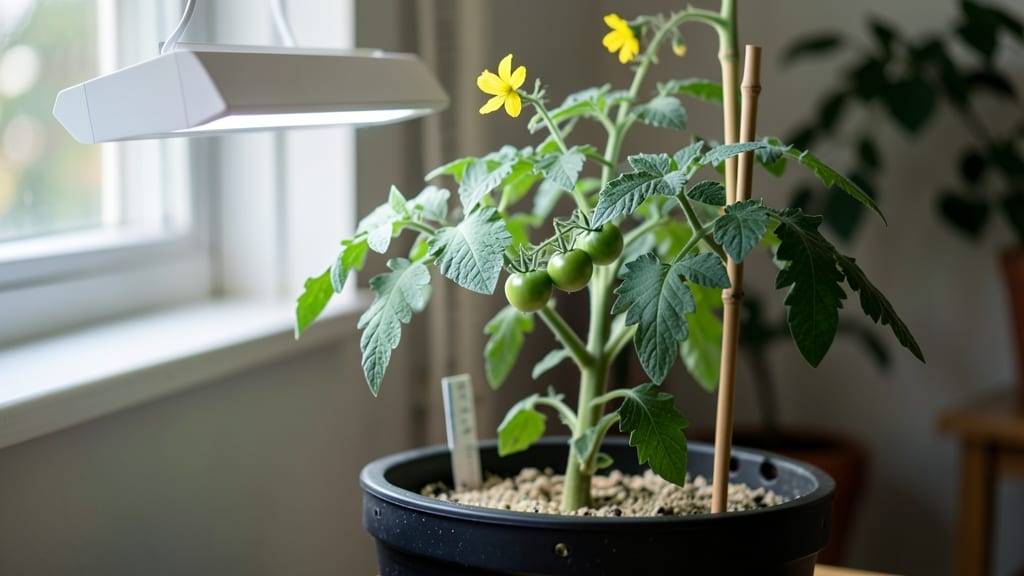
To grow thriving tomatoes indoors, how much light does a tomato plant need indoors? You’ll need 6–12+ hours of bright light daily—more than most houseplants, and far beyond what a typical window can provide.
Picture this: your tomato seedlings stretch toward the window like sun-starved teenagers, their stems weak and leaves pale. That’s not just a growth spurt—it’s a cry for light, and without it, you’ll end up with leafy monsters instead of juicy fruit.
The good news? With the right setup, you can trick your plants into thinking they’re basking in summer sunshine.
Natural light works best near a south-facing window, but even then, cloudy days and short winter sunlight fall short. That’s where grow lights come in—LED bulbs designed to mimic the sun’s spectrum can turn your kitchen into a tomato paradise, even in USDA Zone 6a winters.
Below, I’ll break down the exact light hours your tomatoes need at each growth stage, how to spot light deficiencies before they ruin your harvest, and the simplest ways to boost brightness in any indoor space—no greenhouse required.

Indoor tomato plant light requirements: exact hours and spectrum needs
Growing tomatoes indoors is a rewarding challenge, but light exposure makes or breaks your harvest. Unlike outdoor plants, indoor tomatoes rely entirely on you to replicate 6-12+ hours of sunlight daily.
Without the right balance of light spectrum and duration, your plants will struggle to produce fruit, leaving you with lush leaves but no juicy tomatoes.
Tomatoes thrive under full-spectrum light that mimics natural sunlight, with a focus on blue (400-500nm) and red (600-700nm) wavelengths. Blue light promotes vegetative growth (leafy stems), while red light triggers flowering and fruiting.
Indoors, you’ll need to supplement natural light with grow lights or strategic window placement to hit these exact requirements.
Here’s the exact breakdown of what your indoor tomato plants need to flourish:
For seedlings, aim for 12-16 hours of light to prevent leggy growth. Use a grow light on a timer set to 14-16 hours daily. As your plants mature, adjust the light spectrum to favor red wavelengths (600-700nm) to encourage flowering and fruit production.
This shift is crucial—without enough red light, your tomatoes may set flowers but fail to develop properly.
If you’re relying on natural light, a south-facing window is your best bet, but even then, you’ll likely need to supplement with grow lights during winter or overcast months.
Place your plants within 6-12 inches of the light source to ensure even coverage. Rotate the pots quarter-turn daily to prevent uneven growth toward the light.
One common mistake is assuming more light is always better. While tomatoes love light, too much direct sunlight (especially through glass) can cause heat stress, leading to blossom drop.
If your indoor space gets hotter than 85°F (29°C), provide shade cloth or indirect light during peak hours. A reflective surface (like aluminum foil on walls) can also maximize light efficiency by bouncing 20-30% more light onto your plants.
To test if your setup is working, monitor your plant’s growth patterns. Healthy tomato plants should have dark green leaves, sturdy stems, and regular flower clusters. If leaves turn yellow or pale, or stems stretch excessively (a sign of etiolation), increase light exposure immediately.
For flowering plants, check for dropped blossoms—this often signals temperature or light stress.
For dwarf varieties like 'Tiny Tim' or 'Micro Tom', 6-8 hours of light may suffice, but larger varieties (e.g., 'Sungold' or 'Beefsteak') demand 10-12+ hours to reach full potential. If you’re using LED grow lights, choose full-spectrum bulbs with a color temperature of 5000-6500K for optimal results.
Avoid cheap white LED bulbs—they lack the red and blue wavelengths tomatoes need to thrive.
Pro tip: Use a light meter (around $20) to measure foot-candles or lux in your setup. Tomatoes need 5,000-10,000 lux for ideal growth. If your reading is below 3,000 lux, invest in a high-quality grow light or adjust your plant’s position closer to the window.
Remember, consistency is key. Tomatoes respond best to stable light cycles, so avoid moving them frequently. If you notice weak stems or sparse foliage
Best lighting solutions for indoor tomatoes: grow lights vs natural light
Growing tomatoes indoors without proper lighting feels like trying to bake a cake in the dark—you might get something, but it won’t be right. Your tomato plants need 6-12 hours of light daily, but not all light sources are equal.
Natural sunlight through a south-facing window is ideal, but most homes can’t provide enough. That’s where grow lights step in to save the day. Let’s break down your options so you can pick the best setup for your space and budget.
First, consider your lighting goals: Are you growing just a few cherry tomatoes on a sunny windowsill, or do you want to run a full indoor garden with multiple plants? Your answer will determine whether you need affordable fluorescent bulbs or a high-end LED grow light system.
Both have pros and cons, and I’ll walk you through the details so you can make an informed choice. The right lighting can turn your indoor tomatoes from sad, leggy plants into fruit-bearing powerhouses.
Lighting Options for Indoor Tomatoes
Pros
- Free natural light
- No electricity costs
- Best for small spaces
Cons
Pros
- Full spectrum for all growth stages
- Adjustable intensity and timing
- Energy-efficient long-term
Cons
- Higher upfront cost
- Requires setup and maintenance
- Not ideal for small setups
Pros
- Affordable upfront cost
- Good for seedlings
- Easy to install
Cons
- Limited spectrum for fruiting
- Less energy-efficient
- Bulbs degrade over time
A south-facing window is the gold standard for natural light, but it’s only practical if your plant gets at least 6 hours of direct sunlight daily. If your window faces north or is shaded by trees, you’ll need to supplement with grow lights.
For most indoor gardeners, LED grow lights are the best long-term investment because they mimic the full sun spectrum tomatoes need to produce fruit. They’re pricier upfront but save money on electricity and last years. Plus, you can adjust the light cycle to match your plant’s growth stage.
If you’re on a tight budget, fluorescent bulbs (like T5 HO or T8) are a decent stopgap for seedlings or small setups. They’re cheap and easy to find, but they won’t support heavy fruiting. For best results, pair them with a reflective hood to maximize light exposure.
Remember, tomatoes need blue light for foliage growth and red light for flowering and fruiting, so a basic fluorescent bulb won’t cut it for long-term success.
For small spaces, like a sunny windowsill or a countertop, a single LED grow light (like the Mars Hydro TS 600W) can cover 2-3 plants. If you’re growing 4+ plants, invest in a larger setup or multiple smaller lights.
Place the light 6-12 inches above the plant and adjust as it grows. Too close, and you’ll burn the leaves; too far, and the light won’t be strong enough. A timer is a game-changer—set it for 14-16 hours of light per day during growth and 8-10 hours when flowering.
Pro tip: Rotate your plants quarter-turn daily if using artificial light to prevent them from leaning toward the source. This ensures even growth and stronger stems. And if you’re using natural light, rotate your pots weekly to keep them growing straight and sturdy.
With the right lighting, your indoor tomatoes will thrive year-round, giving you homegrown flavor that beats store-bought any day. 🌱