
Planting
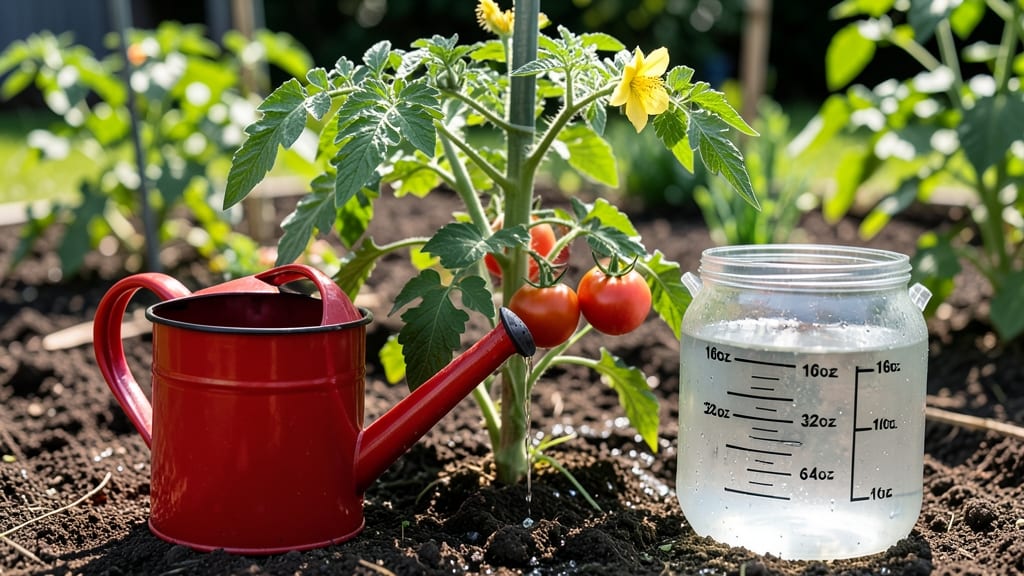
To keep your tomato plants thriving, you’ll need between 1 and 3 gallons of water per plant per week—but the exact amount depends on their growth stage, container size, and even the weather.
Struggling to keep your tomato plants lush and productive? The answer isn’t just how often you water—it’s how much you pour into the soil. Get the watering math wrong, and your vines will either drown or wither before harvest season.
Young seedlings only need about ½ gallon per week 🍅, while mature plants with heavy fruit loads can demand 3 gallons or more during peak summer heat. Container-grown tomatoes dry out faster than those in garden beds, so they’ll need more frequent deep watering.
In this guide, I’ll break down the exact gallon requirements for each growth stage, share a simple formula to calculate your plant’s needs, and reveal the best watering techniques to avoid waste—so you can grow juicy tomatoes without guessing.
Tomato plant water needs by growth stage: gallons per week
Watering your tomato plants isn't a one-size-fits-all task—it changes dramatically as your plants grow. A seedling might only need 1 gallon per week, while a fruit-laden vine can drink 3+ gallons weekly.
Understanding these stages helps you avoid both root rot and blossom drop, ensuring a bountiful harvest. The key? Adjusting your watering schedule to match your plant's growth demands and soil conditions.
Tomatoes are thirsty plants, but their water needs shift as they transition from vegetative growth (leaf production) to fruit development. Sandy soil drains quickly, while clay holds moisture longer—so your local soil type plays a huge role in how much water your tomatoes actually need.
For example, a 5-gallon container might require daily top-ups in summer, while an in-ground plant in loamy soil could go 3-4 days between deep waterings.
During the seedling stage, your tomato plants have tiny root systems, so they only need 1 gallon per week in well-draining soil. Think of this as their training wheels phase—too much water can suffocate roots, while too little causes wilting.
I like to use a spray bottle for seedlings in containers to mimic gentle rain, which helps prevent seedling damping-off, a fungal disease that attacks young plants.
Once your tomatoes hit the vegetative stage (4-8 weeks), their water needs double. This is when they’re building their leaf canopy and preparing for flowering. In-ground plants typically need 2 gallons per week, but container-grown tomatoes may require 1.5 gallons due to faster soil drying.
The trick here is deep watering—soak the soil until water runs out the drainage holes (for containers) or seeps 6 inches deep (for in-ground plants).
When your tomatoes start flowering, their water needs jump to 3 gallons per week for in-ground plants. This stage is critical because water stress can cause flowers to drop before they turn into fruit.
I’ve seen firsthand how inconsistent watering leads to blossom end rot, a common issue where the bottom of tomatoes turns black and mushy. To prevent this, I water at the base of the plant in the morning, avoiding the leaves to reduce fungal diseases like early blight.
Finally, during the fruiting stage, your tomatoes will drink the most water—up to 6 gallons per week for large, productive plants. This is when they’re growing heavy fruit loads, and their roots need to work overtime to deliver nutrients and moisture.
If you’re growing in containers, you might need to water daily in hot
How to calculate gallons needed for your tomato plants
Calculating the right amount of water for your tomato plants isn’t guesswork—it’s simple math based on your container size and soil type. Too little water stresses roots, while too much suffocates them.
Let’s break down the formula to determine how many gallons per plant you need weekly, tailored to your setup.
Start by measuring your container depth and diameter. A standard 5-gallon pot holds about 1 gallon of water per inch of soil depth.
For example, a 12-inch deep pot with a 12-inch diameter holds roughly 5-7 gallons of soil—meaning you’ll need to replace about 1-2 gallons per watering to keep moisture optimal. Always account for drainage holes too!
⚠️ Warning: Overwatering Kills Too!
Signs of overwatering: Yellowing leaves, moldy soil, or roots that smell rotten. Signs of underwatering: Wilting leaves (even when watered), dry soil 2+ inches deep, or fruit cracking. Adjust your gallon calculations if you see these—your tomatoes depend on balance!
Next, test your soil moisture before watering. Stick your finger 2 inches deep—if it feels dry, it’s time to water. For sandy soil, which drains fast, you may need 1-2 gallons per watering.
For clay soil, which holds moisture longer, reduce to ½-1 gallon. Mulch helps retain moisture, cutting your gallon needs by up to 30%.
Factor in your climate zone. In hot, dry areas like USDA Zone 9, mature tomato plants need 3-5 gallons per week. In cooler zones like Zone 5, 1-2 gallons weekly often suffices. Always water deeply—aim for 6-8 inches of soil saturation—rather than light, frequent sprinkles.
For container gardens, multiply your pot’s gallon capacity by 0.75 to estimate water needs. A 7-gallon pot might only need 5 gallons per week if mulched. Use a moisture meter for accuracy—it removes the guesswork and prevents root stress.
Finally, adjust based on your tomato variety. Determinate types (like Roma tomatoes) need slightly less water than indeterminate varieties (like Beefsteak tomatoes). Always water at the base of the plant to avoid fungal diseases like blight, and avoid wetting leaves.