
Planting
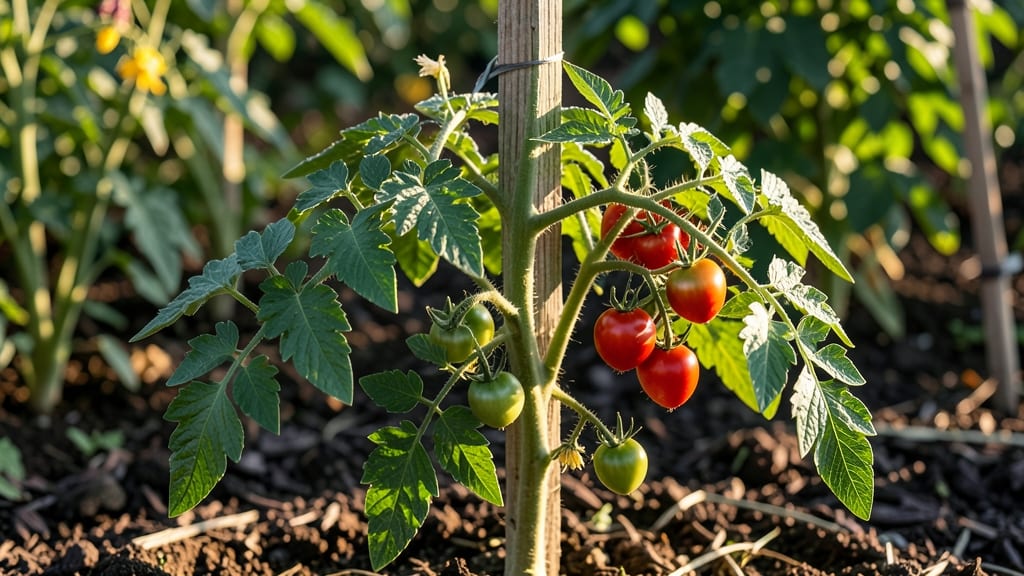
How long a tomato plant lasts depends on its type, but most tomato plants complete their lifecycle in one growing season (3-6 months). They typically produce fruit for 2-3 months before declining due to energy depletion. Perennial varieties may survive mild winters but rarely yield fruit again, so gardeners usually replant annually for consistent harvests.
A tomato plant's lifespan is tightly linked to its growth cycle. 🌱 Once it starts flowering and fruiting, the plant diverts all its energy to producing tomatoes, leaving little for new growth or defense against pests.
Determinate varieties (bush types) tend to have shorter, more concentrated fruiting periods, while indeterminate varieties (vining types) may produce fruit for a longer stretch but still decline after 6-8 months.
The key to maximizing your harvest is understanding these stages—planting at the right time and providing proper care can help you squeeze every last ripe tomato from your plants before they fade.
Most gardeners choose to replant annually because the effort of extending a plant's life often isn't worth the diminishing returns. 💫 For those who want to experiment with overwintering, selecting cold-hardy perennial varieties and providing protection can sometimes yield a second, smaller harvest the following year.
However, the energy the plant expends surviving winter often comes at the expense of fruit production, making annual replanting the most reliable strategy for consistent yields.
💡 In This Article
- Tomato Plant Lifespan Stages: Growth, Fruiting, and Decline
- Extending Tomato Plant Life: Pruning, Care, and Renewal Strategies
Tomato plant lifespan stages: growth, fruiting, and decline
The tomato plant's lifecycle begins with seed germination, where roots establish within 5-7 days under ideal conditions (70-80°F soil temperature). During the seedling stage (weeks 1-4), the plant focuses solely on leaf and stem growth, building the energy reserves needed for future flowering.
This stage is critical—cool temperatures or poor light can stunt growth, delaying the entire lifecycle by 2-3 weeks.
Determinate varieties (like 'Roma' or 'Celebrity') grow compactly, reaching maturity in 60-70 days, while indeterminate types (such as 'Sungold' or 'Cherry') continue growing until frost, often exceeding 90 days before fruiting peaks.
Flowering marks the transition to fruit production, typically occurring 6-8 weeks after planting, depending on variety and climate. The plant now diverts 70-80% of its energy to flower and fruit development, leaving little for new growth.
This shift explains why tomato plants often decline after 2-3 months of fruiting1-2 months compared to determinate types, but even they eventually exhaust their resources.
The stress of continuous fruiting also accelerates senescence, causing leaves to yellow and drop as the plant redirects nutrients to ripening tomatoes.
Environmental factors like temperature and sunlight play a huge role in this decline. Tomatoes thrive in 75-85°F conditions but struggle when temperatures exceed 90°F, leading to flower drop and reduced fruit set.
Similarly, insufficient sunlight (6-8 hours daily) weakens the plant, making it more vulnerable to stress. 🌞 The combination of energy depletion and environmental strain is why most tomato plants last only one season—even with ideal care, the plant's biological clock is set to prioritize reproduction over longevity.
This is especially true for heirloom varieties, which often produce fewer but larger fruits, further draining the plant's resources.
Determinate vs. indeterminate varieties offer different timelines for this decline. Determinate plants produce fruit in a single, concentrated burst (usually 4-6 weeks), then decline rapidly as all energy shifts to ripening.
Indeterminate plants, however, produce fruit continuously over 3-5 months, but their vines grow taller and require more support, which can strain the plant's structure. The trade-off is clear: determinate varieties offer a shorter but intense harvest, while indeterminate types provide a longer, albeit slower, yield.
Understanding these differences helps gardeners choose varieties that align with their growing season and harvest goals.
One often overlooked factor is the plant's root system. As the tomato matures, its roots expand to support the increasing demand for water and nutrients. However, if the soil becomes compacted or nutrient-depleted (common in 6-8 weeks of heavy fruiting), the roots struggle to absorb enough resources.
This leads to stunted growth, smaller fruits, and eventual decline. 🌱 Amending the soil with compost or using slow-release fertilizers can mitigate this, but the plant's natural lifecycle remains the primary limiting factor.
Even with perfect care, the biological process of energy allocation ensures that tomato plants are short-lived annuals—or, in rare cases, short-lived perennials in frost-free climates.