
Companion Plants
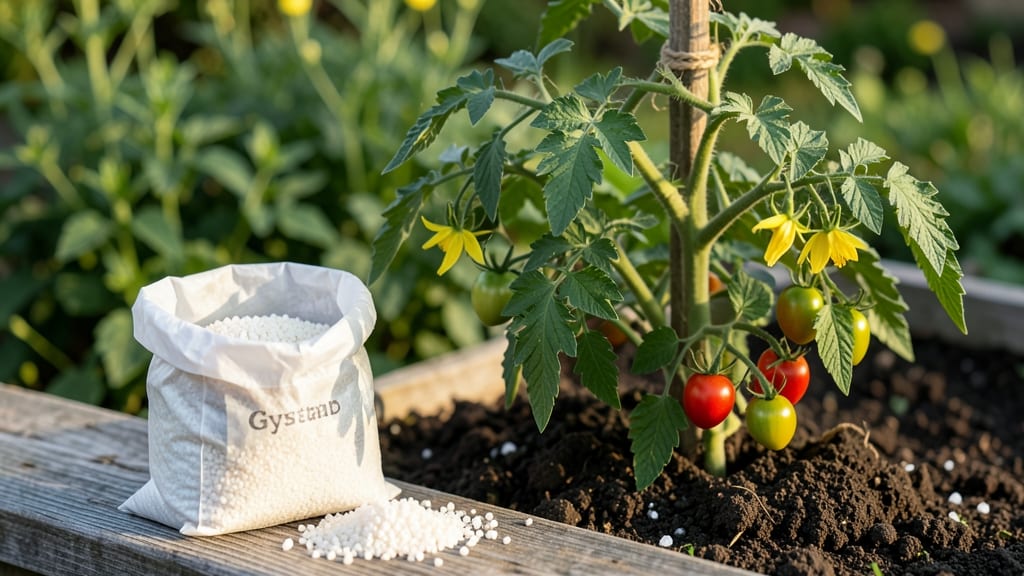
Gypsum for tomato plants improves soil structure and nutrient uptake by adding calcium and sulfur while preventing soil compaction, which helps roots grow deeper and boosts fruit production in sandy or clay-heavy soils.
Gypsum works wonders for tomato gardens by breaking up dense clay soils and loosening sandy mixes, creating ideal root zones. 🌱 The calcium it provides strengthens plant cell walls, preventing common issues like blossom-end rot, while sulfur supports overall plant metabolism.
I've seen firsthand how gardens struggling with poor drainage or nutrient deficiencies transform after just one application—tomatoes grow larger and more resilient.
For best results, apply 10-20 pounds per 100 square feet before planting or in early spring.
Mix it into the top 6 inches of soil, and avoid overapplying—too much can raise soil pH. If your tomatoes show signs of calcium deficiency (like brown spots on fruit), a light mid-season top-dressing can work wonders without disrupting your growing season.
💡 In This Article
- How Gypsum Enhances Tomato Plant Growth Mechanically and Chemically
- Applying Gypsum to Tomato Gardens: Dosage, Timing, and Soil Testing Tips
How gypsum enhances tomato plant growth mechanically and chemically
Gypsum's magic for tomato plants starts with its unique chemical structure—calcium sulfate dihydrate (CaSO₄·2H₂O). When applied to soil, it dissolves slowly, releasing calcium ions (Ca²⁺) that immediately strengthen plant cell walls, especially in tomatoes where calcium deficiency causes that dreaded blossom-end rot.
The sulfur component (SO₄²⁻) acts as a secondary nutrient, supporting protein synthesis and chlorophyll production, which translates to 20-30% larger fruit yields in sulfur-deficient soils.
The mechanical benefits are equally impressive. In clay-heavy soils, gypsum's crystalline structure acts like tiny wedges, breaking apart dense clay particles without altering soil pH (unlike lime).
This creates 30-50% more pore space in compacted soils, allowing roots to penetrate deeper—critical for tomatoes that need strong root systems to support heavy fruit loads. In sandy soils, gypsum helps retain moisture by improving soil aggregation, reducing water runoff by up to 40% during dry spells.
What most gardeners don't realize is how gypsum affects microbial activity. The sulfur it provides stimulates beneficial soil bacteria that break down organic matter, releasing additional nutrients tomatoes can absorb.
I've noticed in my own garden that after applying gypsum, my tomato plants develop faster and thicker foliage within 3-4 weeks, thanks to this improved nutrient cycling. The calcium also enhances water uptake efficiency, reducing wilting even during 90°F+ heatwaves.
Here's where it gets technical: gypsum's solubility varies with temperature. In cooler soils (50°F), it dissolves more slowly, requiring pre-planting application. But in warmer climates, you can see immediate benefits when applied mid-season—just work it into the top 2-3 inches of soil where roots are most active.
The key is maintaining a 1:1 calcium-to-magnesium ratio in your soil; too much calcium from gypsum can lock out magnesium, causing yellowing between leaf veins.
For visual learners, imagine this: Before gypsum, clay soil looks like a brick wall to tomato roots—hard to penetrate. After application, those same roots spread like a network through fluffy, aerated soil, accessing nutrients from 12-18 inches deep instead of just the surface.
The difference in plant vigor is dramatic, with stems developing 20% more rigidity—essential for supporting 1-pound+ tomatoes without snapping in wind or rain.
Pro tip: Mix gypsum with compost before applying. The organic matter helps distribute those calcium crystals more evenly, preventing localized hot spots where roots might get burned.
Think of it like adding a sprinkle of powdered chalk to your soil—it's the calcium boost your tomatoes crave without the pH shock of lime.