
Companion Plants
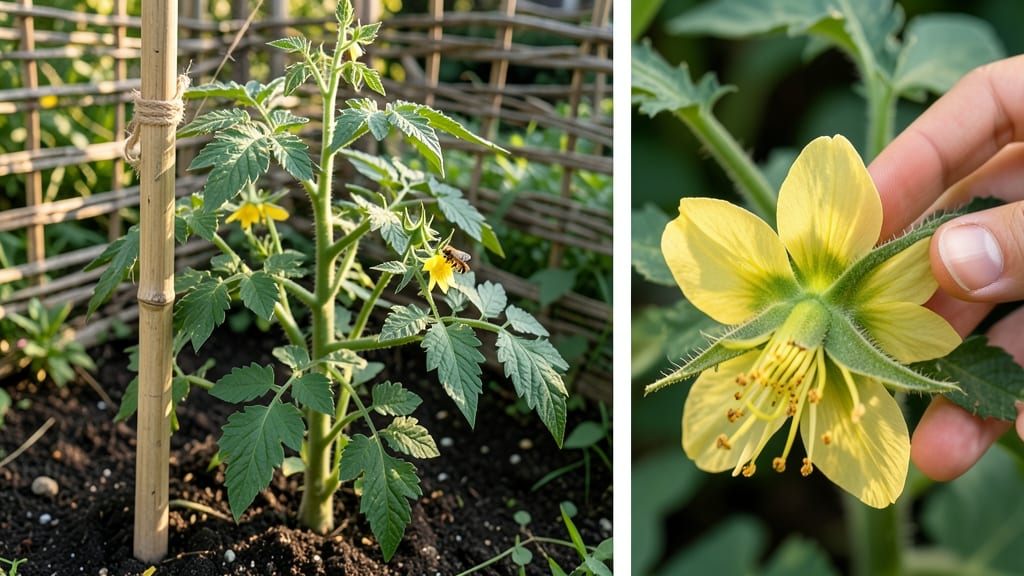
Tomato plants need to be pollinated to produce fruit, as their flowers require pollen transfer from one blossom to another. Hand-pollination helps when natural pollinators like bees are scarce, improving fruit set and yield in both indoor and outdoor gardens.
Pollination is the critical step that turns tomato flowers into fruit, and without it, those blossoms simply drop off. 🌱 Most gardeners rely on bees or wind to carry pollen between flowers, but when these helpers are absent—like in greenhouses or during rainy weather—you'll need to step in.
I've seen firsthand how hand-pollination can double fruit production in containers or during early spring planting when bees are still scarce. The key is timing: focus on flowers that are just starting to open, as they're most receptive to pollen transfer.
For best results, use a small paintbrush or cotton swab to gently brush the pollen from the male stamens onto the female pistil in the center of each flower. This mimics how bees naturally spread pollen, but with more precision.
Determinate tomatoes (those that grow in compact bushes) often need less intervention, while indeterminate varieties (the vining types) benefit most from regular hand-pollination, especially when grown indoors or in areas with limited pollinator activity.
💡 In This Article
- How Tomato Pollination Works Naturally
- Step-by-Step Guide to Hand-Pollinating Tomato Plants
How tomato pollination works naturally
Tomato flowers have a fascinating two-part reproductive system where pollen must travel from the male stamens to the female pistil for fruit to develop. Each flower contains five stamens (the pollen-producing structures) surrounding a central pistil topped with a sticky stigma.
When bees land on flowers, their bodies pick up pollen from the stamens and carry it to the next flower's stigma, creating the transfer needed for fertilization. 🌸 This process is so efficient that a single bee can pollinate hundreds of flowers in an hour, which is why outdoor tomato plants often thrive without human intervention.
The anatomy of tomato flowers plays a crucial role in their pollination success. The stamens release pollen that's easily picked up by pollinators or wind currents, but the pistil's sticky stigma needs direct pollen contact to trigger fruit formation.
Interestingly, tomato flowers are self-pollinating in the sense that pollen from one flower can fertilize another on the same plant, but they still benefit from cross-pollination between plants for genetic diversity.
In ideal conditions with plenty of bees, this natural process happens automatically, but environmental factors like rainy weather, greenhouse conditions, or lack of pollinators can disrupt it, leading to blossom drop instead of fruit development.
Wind can also play a role in pollination, especially for outdoor plants, but it's far less efficient than bees. The pollen grains are relatively heavy (about 20-30 micrometers in diameter), which makes them less likely to be carried by air currents compared to lighter pollens like those from corn.
This is why you'll often see more successful fruit set on plants near bee-friendly gardens or those planted alongside pollinator-attracting flowers like basil or marigolds. 🐝 The combination of bee activity and wind creates what botanists call "pollination redundancy"—multiple pathways ensuring fruit production even when one method fails.
What most gardeners don't realize is that temperature also affects pollination efficiency. Tomatoes pollinate best when daytime temperatures stay between 70-85°F. Below 55°F or above 95°F, pollen production and viability drop significantly.
This is why early spring plantings or late summer heat waves often result in poor fruit set unless you intervene with hand-pollination. The flowers may look perfect, but without proper pollen transfer, they simply won't develop into tomatoes.
Another critical factor is the timing of flower opening. Tomato flowers typically open in the morning and remain receptive for about 24-48 hours. After this window closes, the flower's ability to accept pollen diminishes dramatically.
This is why early morning is the ideal time for both natural pollinators and gardeners doing hand-pollination—you're working with flowers at their peak receptivity. The scent of freshly opened tomato flowers (a subtle sweet aroma) actually attracts pollinators, creating a natural cycle that gardeners can mimic when helping with pollination.