
Companion Plants
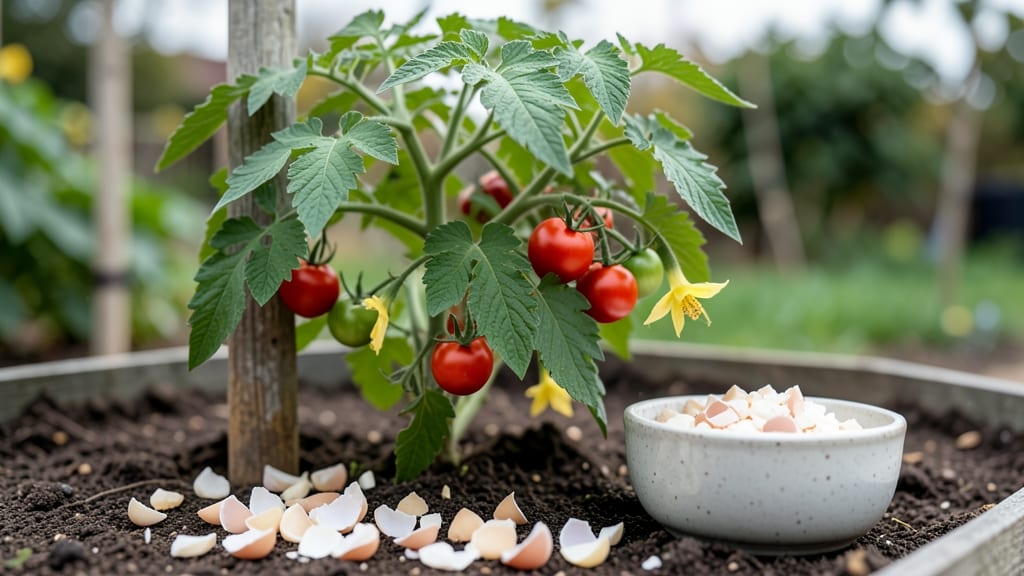
Eggshells do help tomato plants by acting as a natural calcium source that prevents blossom-end rot, strengthens stems, and promotes healthier root systems—just crush and compost them first for the best results.
This works because eggshells break down slowly in the soil, releasing calcium carbonate over time. 🌱 The mineral helps stabilize plant cell walls, which is especially critical for tomato plants prone to blossom-end rot—a common issue when calcium levels are low.
I’ve noticed the biggest benefits when I mix crushed shells directly into planting holes or work them into compost before adding to garden beds.
For best results, bake the shells at 200°F for 10 minutes first to kill bacteria, then crush them into a fine powder. You can also blend them into homemade compost for a gradual nutrient boost.
Just remember—while eggshells are helpful, they shouldn’t replace a balanced fertilizer, especially if your soil is already rich in calcium.
💡 In This Article
- How Eggshells Supply Calcium to Tomato Plants
- Best Ways to Use Eggshells for Tomato Gardens
How eggshells supply calcium to tomato plants
Eggshells primarily provide calcium in the form of calcium carbonate (CaCO₃), which makes up about 95% of their composition.
When crushed and added to soil, these microscopic particles begin breaking down through a natural process called carbonation—where soil bacteria and moisture gradually convert the calcium carbonate into more plant-accessible forms like calcium ions (Ca²⁺).
This transformation happens fastest in slightly acidic to neutral soil (pH 6.0-7.5), which is ideal for most tomato varieties.
The real magic happens at the cellular level. Calcium acts as a structural "glue" for plant cell walls, particularly in growing tissues like new leaves and fruit.
Without enough calcium, tomato plants develop blossom-end rot—a condition where the blossom end of fruits turns brown and mushy due to weakened cell walls.
Studies show that adding crushed eggshells can raise soil calcium levels by 10-15% over several weeks, which is often enough to prevent this common issue. 🌱
However, there's a catch: eggshells release calcium too slowly to address immediate deficiencies. The breakdown process can take 4-8 weeks depending on soil conditions, so they're best used as a preventative measure rather than a cure.
For example, if your soil test shows calcium levels below 1,000 ppm, eggshells alone might not be sufficient—you'd need to combine them with faster-acting amendments like gypsum (calcium sulfate).
Another key factor is particle size. When you crush eggshells into powder (1-2mm particles), they have 30% more surface area for microbial action compared to larger chunks.
This is why I always recommend baking them first at 200°F for 10 minutes—it sterilizes them while making the crushing process more efficient. The resulting fine powder mixes easily into soil without clumping.
What most gardeners overlook is how eggshells interact with other nutrients. Calcium helps regulate the uptake of potassium and magnesium, which means adding eggshells might actually improve your plant's ability to absorb these essential minerals.
For instance, tomatoes need a calcium-to-magnesium ratio of about 3:1 for optimal growth—eggshells can help maintain this balance naturally.
For visual learners, imagine this: The crushed eggshell particles look like tiny white grains in your soil, slowly dissolving like sugar in water. Over time, they create microscopic calcium-rich zones around plant roots where beneficial microbes thrive, creating a mini ecosystem that supports healthier growth. 💫