
Vegetables
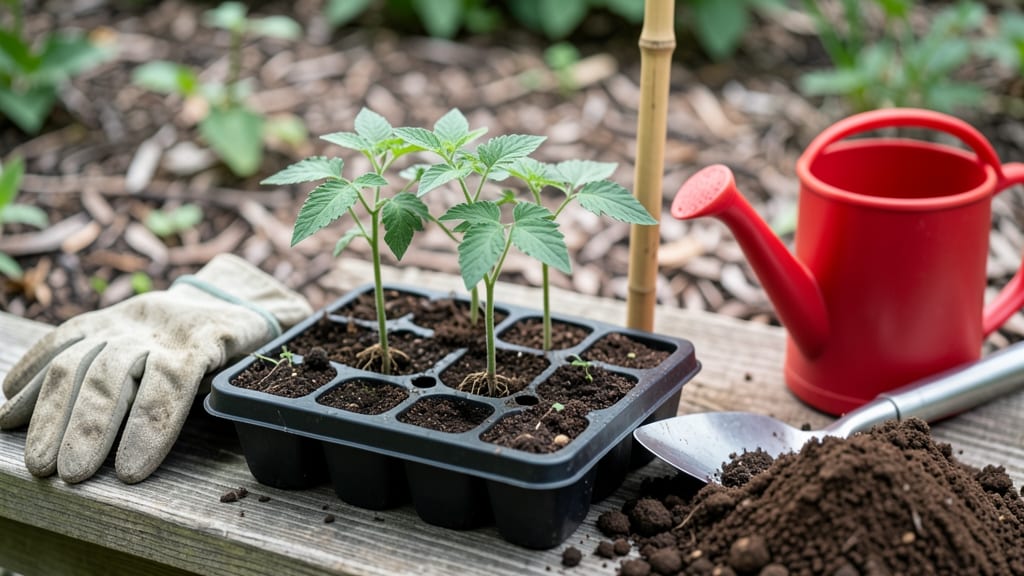
Those deep purple Cherokee Purple tomato seedlings you just bought hold more flavor than any store-bought tomato. 🌱 I've grown them for three seasons now, and every bite proves why heirloom gardeners swear by this variety—the rich, smoky-sweet taste that makes slicing sandwiches feel like a celebration.
Start by giving them the right home: well-draining soil with plenty of organic matter, and a sunny spot where they'll get at least 6-8 hours of direct sunlight daily.
The key to thriving seedlings is consistency—water when the top inch of soil feels dry, and avoid wetting the leaves to prevent disease. Within 2-3 weeks, you'll see strong stems and vibrant foliage signaling healthy growth.
By transplanting at the right time (after your last frost when soil reaches 60°F), you'll set them up for a heavy harvest—those beefsteak-sized tomatoes will start appearing around 75-80 days from transplant.
The deep purple color fades to red as they ripen, but the flavor? Unmatched in any grocery store.
Watch for common issues like blossom end rot (fix with calcium-rich amendments) or pests (use row covers early), and you'll end up with a plant that produces until the first frost.
The effort pays off in tomatoes so flavorful, neighbors will ask where you got them—now you can tell them you grew them yourself.
📚 In This Guide
- What you need
- Instructions
- Tips and common mistakes
- Wrapping up and next steps
What you need
- ● Cherokee Purple tomato seeds – Purchase from a reputable seed supplier (or save seeds from a ripe heirloom tomato if you’re feeling adventurous!). Aim for 3-5 seeds per planting spot if starting indoors.
- ● Seed-starting containers – Use biodegradable pots (2-3 inches deep), cell trays, or repurposed containers (like egg cartons or yogurt cups). Ensure they have drainage holes!
- ● High-quality seed-starting mix – A lightweight, sterile potting mix (avoid garden soil—it’s too dense!). Look for blends labeled for seedlings.
- ● Grow lights or sunny windowsill – Seedlings need 12-16 hours of light daily. A full-spectrum LED grow light (or a south-facing window) works best.
- ● Spray bottle with water – For gentle hydration without disturbing seeds.
- ○ Heat mat (optional but helpful) – Speeds up germination if your space is cool (70-85°F is ideal).
- ● Fertilizer (balanced or seedling-specific) – A low-dose, water-soluble fertilizer (5-10-5 or 10-10-10) once seedlings sprout.
- ● Hardening-off supplies – If transplanting outdoors, prepare for gradual acclimation with shade cloth or a sheltered spot.
- ● Humidity dome or plastic wrap – Keeps moisture in until seeds germinate (remove once sprouts appear!).
- ● pH testing kit – Ensures your soil mix is slightly acidic (6.0-6.8) for optimal growth.
- ● Plant labels & markers – Track varieties and planting dates (especially useful if growing multiple tomato types!).
- ● Compost or worm castings – Boosts nutrient density when transplanting seedlings outdoors.
- ● Trellis or cages (for later) – Cherokee Purples grow large—plan for 6+ feet of vertical support!
Step-by-step instructions for cultivating Cherokee Purple tomato seedlings
Here's how I transform Cherokee Purple seeds into vigorous, disease-resistant seedlings ready for transplant.
🌱 Step 1: Prepare Containers and Seed-Starting Mix
Use 4-inch deep biodegradable pots or cells for each seedling—Cherokee Purples develop deep root systems and need room to establish. Fill them with a sterile seed-starting mix (never garden soil) that holds moisture but drains freely. I like to blend mine with 20% perlite to prevent compaction.
Moisten the mix until it feels like a damp sponge—squeeze gently and it should hold together without dripping. Tap the containers lightly to settle the soil, then create a small ¼-inch deep indentation for each seed. Cherokee Purples are large seeds, so you only need one per pot. I label each pot immediately with the variety and date—these seedlings grow fast and look identical until they develop their signature purple hue.
💧 Step 2: Sow and Maintain Ideal Germination Conditions
Place one seed per pot at the ¼-inch depth, then cover lightly with additional mix. Mist the surface gently with a spray bottle until evenly moist—don't overwater, or the seeds will sink too deep. The ideal germination temperature for Cherokee Purples is 75-85°F, so I use a seedling heat mat to maintain warmth.
Cover the pots with a clear humidity dome or plastic wrap to retain moisture and warmth. Check daily for condensation—if you see water droplets on the dome, it's working. Germination typically occurs in 7-14 days, but don't remove the dome until 50% of seeds have sprouted. This prevents damping-off, a fungal disease that collapses seedlings overnight. Once sprouts appear, uncover immediately to harden them off gradually.
☀️ Step 3: Provide Optimal Light and Prevent Legginess
Cherokee Purple seedlings need 14-16 hours of light daily to prevent leggy growth. A south-facing window rarely provides enough intensity, so I use a full-spectrum LED grow light positioned 2-4 inches above the plants. Raise the light as they grow to maintain that distance—this ensures strong, stocky stems instead of weak, stretched seedlings.
You'll know your light setup is correct when seedlings develop deep green leaves with compact spacing between nodes. If stems grow thin and leaves space far apart, your light is too far away. Rotate pots a quarter turn daily so they grow upright rather than leaning toward the light. Once first true leaves appear (not the initial seed leaves), reduce watering slightly to encourage root development.
🌿 Step 4: Harden Off and Prepare for Transplant
Two weeks before your last frost date, begin hardening off the seedlings by placing them outside in a sheltered, shaded spot for 1-2 hours the first day. Gradually increase outdoor time by 1 hour daily over 10-14 days, slowly introducing more sun and wind. Cherokee Purples are sensitive to transplant shock, so this gradual process is critical.
Watch for wilting or leaf scorch—signs the plants aren't ready. Once seedlings tolerate a full day outside without stress, they're ready for the garden. Transplant on an overcast afternoon to reduce shock, and water deeply at the base. Space plants 24-36 inches apart—Cherokee Purples spread widely and need room to thrive. Mulch heavily to retain moisture and prevent soil-borne diseases.
Tips & tricks for cultivating Cherokee Purple tomato seedlings
Transforming Cherokee Purple seeds into robust seedlings requires attention to detail—here's how to avoid common pitfalls and maximize success.
Container Selection: While 4-inch pots work perfectly, consider using biodegradable peat pots that can be planted directly into the garden. This eliminates transplant shock entirely and preserves the delicate root structure. I've found that peat pots with built-in drainage holes prevent waterlogging, which Cherokee Purples are particularly sensitive to. The extra depth (at least 4 inches) is crucial—these tomatoes develop extensive root systems that need room to establish before the plant puts energy into fruiting.
Germination Temperature: Maintaining that 75-85°F range is non-negotiable for Cherokee Purples. If your home runs cooler, place pots on a seedling heat mat set to 75°F—this is especially important in the first 72 hours when seeds are most vulnerable. I've seen germination rates drop by 40% when temperatures dip below 70°F. For even more consistent results, consider using a small greenhouse or propagation dome that maintains both temperature and humidity without needing constant monitoring.
Light Management: The 14-16 hours of light requirement isn't just about duration—it's about intensity. If you notice seedlings stretching toward the light with elongated stems, your setup isn't strong enough. I recommend supplementing natural light with a full-spectrum LED grow light on a timer. Position it 2-3 inches above the seedlings initially, then raise it as they grow. The key visual cue is leaves that are bright green and compact—if they're pale or spaced far apart, the light is too weak or distant.
Pro Tips for Cherokee Purple Tomato Seedlings
- Transforming Cherokee Purple seeds into robust seedlings requires attention to detail—here's how to avoid common pitfalls and maximize success.
- Container Selection: While 4-inch pots work perfectly, consider using biodegradable peat pots that can be planted directly into the garden.
- Germination Temperature: Maintaining that 75-85°F range is non-negotiable for Cherokee Purples.
Frequently asked questions
Got questions about growing Cherokee Purple tomato seedlings? You’re not alone—this heirloom beauty is beloved but can be tricky for beginners! Here are answers to the most common queries to help you cultivate success.
When is the best time to plant Cherokee Purple tomato seedlings outdoors?
Plant your seedlings after the last frost when soil temps reach at least 55°F (13°C). For most regions, this means late spring (April–June), but wait until nighttime temps stay above 50°F (10°C) to avoid shock. Harden off seedlings for 7–10 days before transplanting for resilience!
How long does it take for Cherokee Purple tomato seedlings to produce fruit?
Expect 70–85 days from transplanting to harvest, depending on climate. Early blooms may drop if stressed—focus on consistent watering and warmth. Patience pays off: these tomatoes ripen slowly but deliver unmatched sweetness and depth!
Why are my Cherokee Purple tomato seedlings wilting or turning yellow?
Wilting often signals underwatering or root stress, while yellow leaves (especially lower ones) may mean overwatering or nutrient deficiency. Check soil moisture—1–1.5 inches deep should stay consistently moist. Boost nutrients with a balanced fertilizer (10-10-10) or compost tea if growth stalls.
Can I grow Cherokee Purple tomatoes in containers? If so, what size pot do I need?
These vining beauties thrive in 5-gallon pots or larger (at least 12–18 inches deep) with well-draining soil. Add a trellis or cage to support their weight—containers dry out faster, so monitor moisture closely. Dwarf varieties like ‘Tiny Tim’ are great for smaller spaces!
Are Cherokee Purple tomatoes prone to diseases? How can I prevent issues?
Yes, their thick skins make them susceptible to blight and cracking in humid climates. Prevent problems by:
- Spacing plants 2–3 feet apart for airflow.
- Avoiding overhead watering (use drip irrigation).
- Removing lower leaves to reduce soil-borne pathogens.
- Rotating crops yearly if growing in the same spot.
Do Cherokee Purple tomatoes need extra care in hot or cold climates?
In hot climates, provide afternoon shade and mulch to retain moisture. In cooler areas, extend the season with row covers or black plastic mulch to warm the soil. These tomatoes love warmth but hate extremes—aim for 70–85°F (21–29°C) days.
Wrapping up and next steps
Growing Cherokee Purple tomato seedlings is a rewarding journey that brings deep flavor, stunning color, and a taste of heirloom magic to your garden. 🌱 Whether you’re a seasoned gardener or just starting, these seedlings offer a delicious and visually striking addition to your harvest.
Now that you’re equipped with the right tips and answers, it’s time to roll up your sleeves and plant those seeds with confidence—your future meals will thank you!
Ready to take the next step? Start by selecting your seedlings (or sowing your own) and give them the love they deserve. Before you know it, you’ll be savoring those rich, meaty slices in sandwiches, salads, or sauces—pure garden-to-table joy! 🍅✨