
Plants
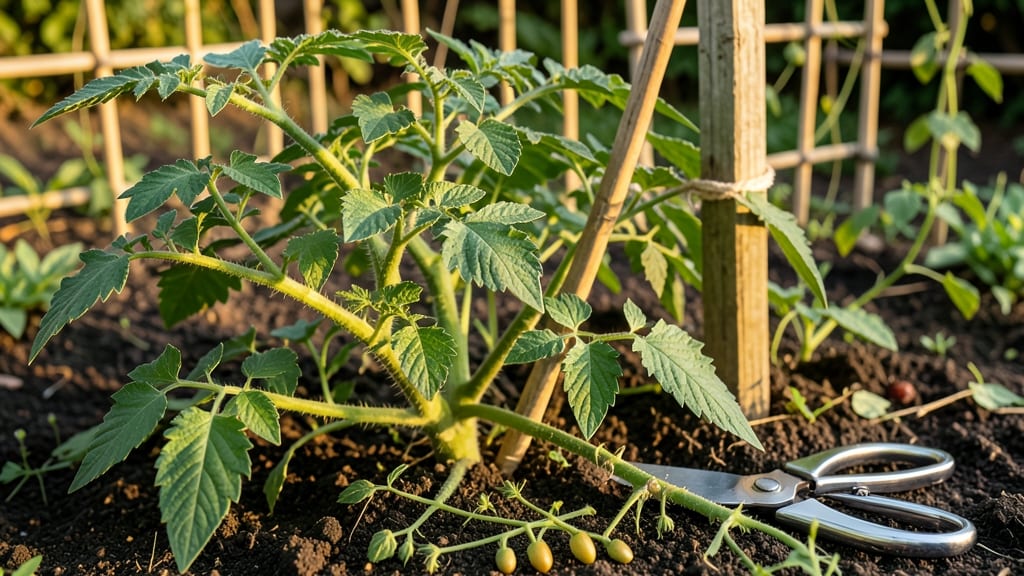
Yes, can tomato plants be topped, and it’s absolutely safe and beneficial for indeterminate varieties, as it encourages more fruit production by redirecting the plant's energy away from vertical growth. Focus on removing the topmost leaves and stems just above a leaf cluster when plants reach 4-5 feet, being careful not to over-prune or risk stunted growth.
Topping works by removing the apical meristem—the growth tip—where hormones like auxins concentrate.
This triggers a hormonal cascade that stimulates lateral branches to develop, each capable of producing more fruit. 🌱 Indeterminate varieties like Roma or Beefsteak respond best to this technique, as they naturally grow taller and produce fruit continuously throughout the season.
The key is balance: prune too much, and the plant struggles to recover; too little, and you miss out on maximizing yield. I always start pruning when plants hit about 3 feet and continue every 2-3 weeks until the first frost, adjusting for my local climate's heat and humidity levels.
For beginners, the most important visual cue is the leaf cluster—always cut just above a set of leaves where new branches can emerge. Use clean pruners to avoid disease transmission, and never remove more than one-third of the plant's foliage at once.
Determinate varieties, like cherry tomatoes, don't need topping—they naturally stop growing and produce fruit in one flush, so pruning them can actually reduce yield.
💡 In This Article
- How Tomato Topping Boosts Fruit Production
- Step-by-Step Tomato Pruning Guide for Beginners
How tomato topping boosts fruit production
When you top tomato plants, you're essentially interrupting the plant's natural growth pattern by removing the apical meristem—the rapidly dividing cells at the very tip of the plant. This growth tip produces auxin, a hormone that suppresses lateral bud growth.
By removing it, you eliminate this hormonal dominance, allowing cytokinins (another plant hormone) to take over and stimulate the growth of dormant buds in the leaf axils. This hormonal shift is what triggers those side shoots—each capable of producing its own fruit clusters. 🌱
Indeterminate tomato varieties, like the classic Beefsteak or Roma, are perfect candidates for topping because they grow continuously throughout the season, producing fruit until frost. These plants can reach heights of 6-10 feet if left unchecked, but their energy gets divided between vertical growth and fruit production.
When you remove the top growth, the plant redirects its resources to developing more lateral branches, each with its own flower clusters. Studies show that properly topped indeterminate plants can produce 20-30% more fruit than unpruned counterparts, though this varies by variety and growing conditions.
The timing of your first topping is crucial—wait until the plant has established a strong root system and is at least 3-4 feet tall. At this stage, the plant has enough energy reserves to recover from pruning and begin producing new growth.
I always look for plants that have reached about 4-5 feet before making my first major cut, as this is when the hormonal shift becomes most effective. Early topping can stress young plants, while waiting too long means missing out on potential fruit production from the upper branches.
Determinate varieties, like most cherry tomatoes, respond differently to topping. These plants grow to a fixed height (typically 3-5 feet) and produce fruit in one main flush before stopping. Pruning them can actually reduce yield by removing potential flower clusters.
The key difference lies in their growth habit—indeterminate plants keep growing and fruiting, while determinate plants focus all their energy on that single harvest. Always check your tomato variety before reaching for the pruners!
What most gardeners don't realize is how the plant's vascular system responds to topping. When you make a clean cut just above a leaf node, you're essentially creating a new growth point that must establish its own connection to the plant's water and nutrient transport system.
This process takes about 7-10 days, during which the plant may look stressed. But once new shoots emerge, they'll develop their own roots and branches, creating a bushier, more productive plant structure. 💫
Consider the environmental factors too—plants in hot climates may need more frequent topping (every 2-3 weeks) to prevent heat stress, while cooler climates can stretch the pruning interval to 3-4 weeks.
The goal is to maintain a balance where the plant has enough foliage for photosynthesis but isn't wasting energy on excessive vertical growth. Too much foliage creates shade within the plant, which can lead to blossom end rot or poor fruit development.